.png)
BongPop Proves the New Luxury of Cannabis Isn’t New at All: It’s Vintage, Upcycled, and One-of-One


In an industry driven by scale, speed, and repetition, true distinction has become rare. Walk into most dispensaries or browse online headshops, and the experience feels familiar.
Clean, uniform glass. Polished branding. Products designed for consistency and mass appeal. The language of “premium” is everywhere, yet much of it feels interchangeable.
A quieter shift is beginning to take hold. One that values provenance over polish, character over perfection, and intention over volume.
At the center of that shift is a growing appreciation for upcycled antique glassware. Objects that carry history, texture, and permanence into a culture that has long leaned disposable.

BongPop exists within this emerging space, though it does not operate like a traditional brand. It is built around a single perspective. Tommy, the founder, began sourcing and reselling vintage items during the pandemic. What started as a personal outlet evolved into something more defined. A curated practice focused on discovering antique glassware and reintroducing it through the lens of cannabis culture.
There is no replication in this model. Each piece is singular. Sourced, not manufactured.
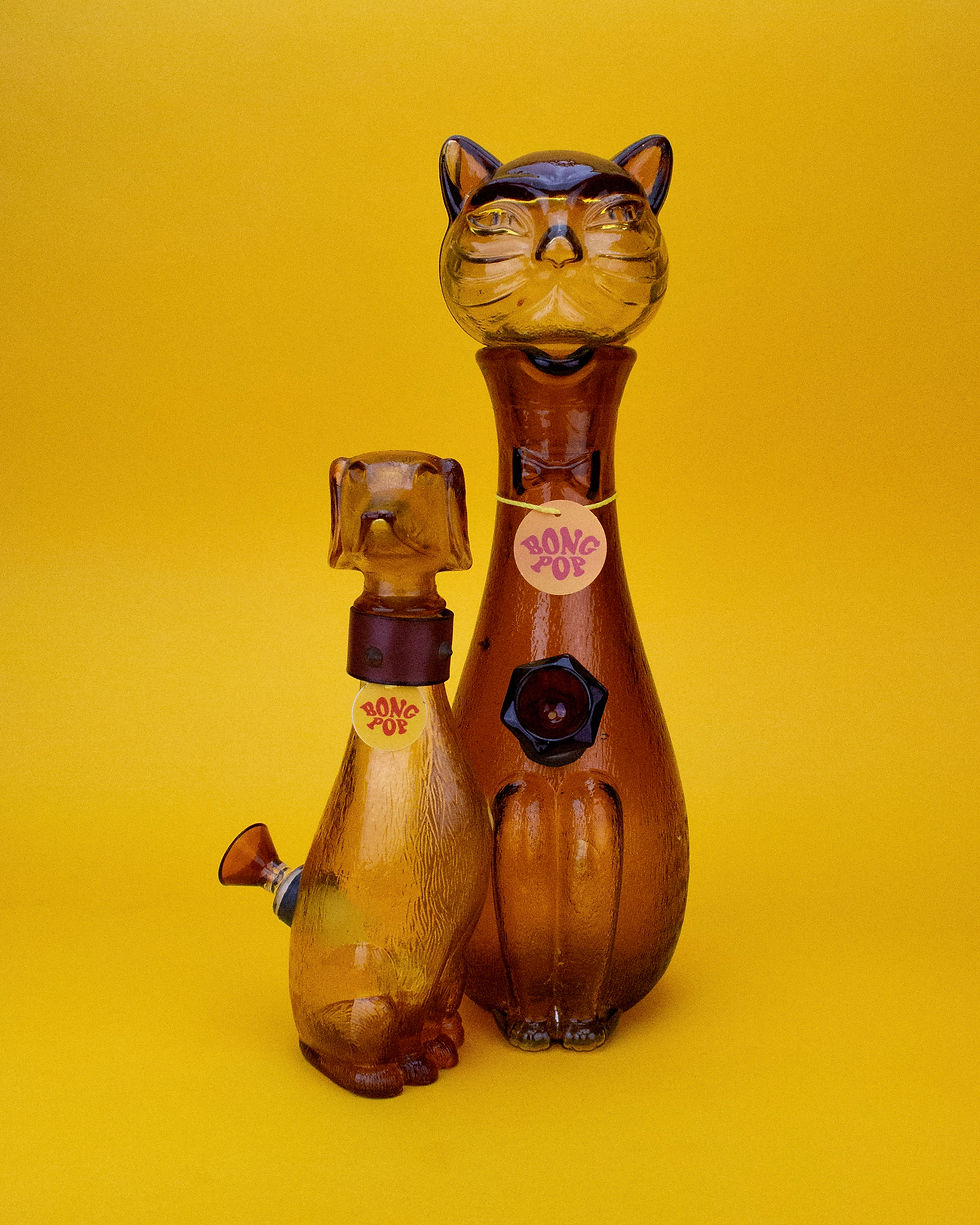
Every BongPop item begins outside of cannabis. A decanter, a vase, a decorative object that once served another purpose. These pieces are selected not in spite of their wear, but because of it. Minor imperfections are preserved as part of the object’s identity. Only structurally sound pieces are chosen, ensuring usability without compromising character.
This approach challenges a long-standing assumption within the category. That value is tied to flawlessness.
Instead, it positions value as something rooted in history.

From a design perspective, antique glass introduces a level of depth that modern production rarely achieves. Subtle variations in color, weight, and form create a tactile experience that feels distinct. From a cultural standpoint, it reintroduces ritual. Smoking becomes less transactional and more intentional. The object itself becomes part of the experience.
There is also a practical environmental benefit. All BongPop pieces are secondhand, extending the lifecycle of items that might otherwise be discarded. Packaging follows the same logic, relying almost entirely on recycled materials to offset the impact of shipping. It is a straightforward approach to sustainability that relies on no exaggerated claims.
The way BongPop operates commercially further reinforces its identity. Inventory is limited by nature, not by design. Pieces are released as they are sourced, often through Instagram. Some are offered through auctions, creating a moment of engagement between seller and buyer. Others are listed at a fixed price and sold directly.
This format feels different from traditional retail. It requires attention, timing, and a level of participation that is often absent from modern e-commerce. The result is a process that feels more personal and less automated.

Transparency remains a key part of the experience. Customers are informed about wear, pricing, and shipping details upfront. There is no attempt to present these pieces as flawless or newly made. That clarity builds trust and reinforces the product's authenticity.
What BongPop ultimately reflects is a broader shift within cannabis culture. As the industry evolves, there is a growing demand for objects that feel grounded. Less manufactured. More meaningful. The definition of luxury is changing. It is no longer defined solely by finish or price. It is defined by uniqueness, authenticity, and narrative.
A one-of-one piece of upcycled antique glassware embodies that shift. It cannot be duplicated. It cannot be mass-produced. Its value lies in its individuality.
For consumers who view cannabis as a ritual rather than a routine, this approach resonates. The objects used in that ritual matter. They influence the pace, the intention, and the overall experience.
BongPop is not attempting to scale that idea. It is simply executing it. In a space still searching for its identity, that level of clarity stands out.

You’ve made it clear this is a one-person operation. Why was it important to keep BongPop personal instead of scaling it into a full team or brand machine?
BongPop, for me, is a deeply personal business that isn’t about scaling into a massive enterprise, but rather a brand that allows me to blend my artisanal skills while making a living. In a way, this business is my art. I’m not simply buying and reselling like a standard marketplace seller. I’m curating, restoring, and sometimes transforming vintage curios and introducing them to a modern audience.
For example, I hand restore all vintage lighters I source so they function as originally intended instead of sitting unused on a shelf. That level of care and attention to quality is what sets BongPop apart. My eye for curation and restoration is the core of the brand, and that’s why it will always remain personal and intentionally small.
What is it about vintage and antique pieces that hits differently than modern glass culture for you?
I’ve always been drawn to the vintage aesthetic. While studying graphic design in college, I focused heavily on the mid-century modern era and why it represented such a peak in design thinking. At the same time, I was also deeply immersed in cannabis culture.
What stood out to me was that the glass available at smoke shops didn’t reflect that same level of design or intention. If I were going to spend real money on a piece, I wanted something I was proud to display, not something I felt the need to hide.
That’s where BongPop came from. It’s not about being “better” than modern glass; it’s about offering something that feels both beautiful and functional within a home.
When you’re sourcing, what makes you say, “This one’s coming home with me”? Is it rarity, design, era, story, or something else?
There are a few key factors. First, the condition is non-negotiable. If there are chips, cracks, or mineral buildup, I pass immediately.
Then I look at the form. Does it feel like it could function well as a bong? Is the neck long enough for usability? Where would the bowl sit? How would the downstem integrate into the piece?
If it passes those checks and still stands out aesthetically, that’s when I move forward. Some of my favorite finds are full barware sets, especially decanters with matching glasses. Those elevate the experience beyond a single object into something that feels curated and complete.
Your policies are strict. All sales final, no custom orders, limited presales. Have holding those boundaries ever cost you opportunities?
My policies exist to protect both myself and my customers. Running a small business allows me to set fair boundaries rather than relying on third-party platforms where sellers often have little protection.
All sales are final is standard in antique retail for a reason. It prevents misuse and ensures fairness. And realistically, once a piece has been used, it can't be returned.
I’ve rarely had issues. In the few cases where something has come up, we’ve always found reasonable solutions, whether that’s store credit, exchanges, or partial refunds.
Global shipping can get expensive and complicated. Why is it still worth offering to collectors outside the U.S.?
Global shipping has always been something I’ve offered, but I’m upfront about the costs. For serious collectors, it’s often worth it.
That said, I’ve paused international shipping due to tariffs and unpredictable added costs. It’s not worth the risk of unexpected fees that could create a negative experience for either side.
Ideally, I’d like to bring it back once those conditions stabilize.
A lot of people romanticize nostalgia right now. Do you see BongPop as part of that cultural wave, or is this something deeper for you?
There is definitely a nostalgic element, but it’s not the full picture. The glassware I source comes from a time when objects were built to be both durable and beautiful. That carries inherent value.
At the same time, my audience is largely Gen Z and younger Millennials, who don’t necessarily have direct nostalgia for these eras. What BongPop does is bridge that gap. It gives older objects a modern function and relevance.
Something that might have once been considered outdated becomes meaningful again when it’s integrated into daily use.
What’s the rarest or most unforgettable piece you’ve come across so far, and what made it special?
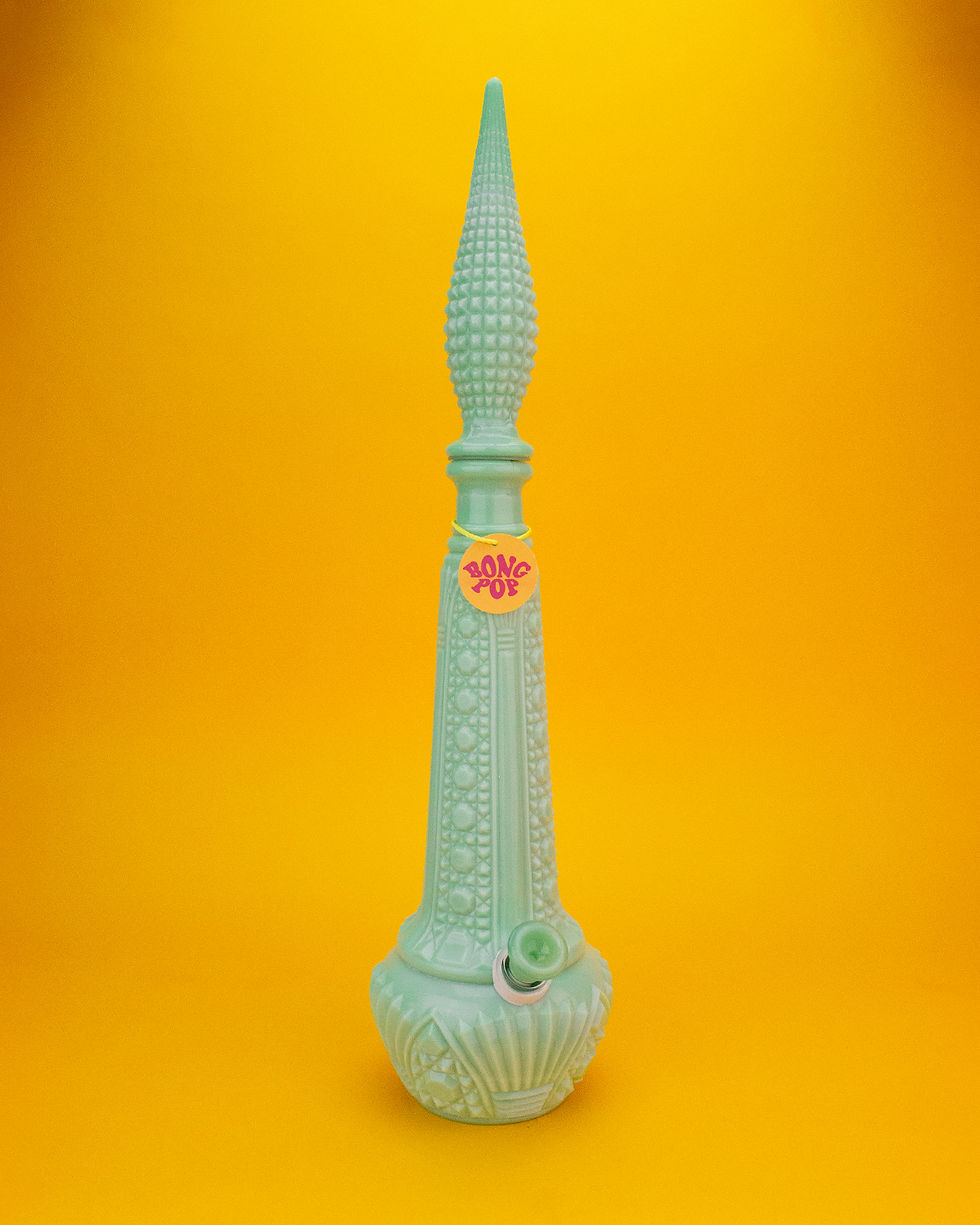
One of the rarest glass pieces I’ve found was a jadeite “genie” bottle made by Empoli. It’s highly sought after due to its opaque green color. Converting it into a bong felt like a bold decision, but it turned out beautifully and continues to exist in someone’s home.
Beyond glassware, I also work with vintage tobacciana. One standout piece was a three-piece set featuring a pop-up cigarette dispenser, a lighter, and an alarm clock, all designed around zodiac imagery, with an esoteric blue orb and brass hardware. Pieces like that carry a level of craftsmanship and storytelling that’s hard to replicate today.
When someone buys from BongPop, what do you hope they understand about the piece's history or craftsmanship?
I try to provide as much context as possible for every item, from its condition to its origin and maker. For many collectors, the story behind an object is just as important as the object itself.

Some pieces even come with personal history. I once sourced a lighter and ashtray set that included a handwritten note from the original owner, explaining it was acquired while stationed in Japan after World War II. Details like that turn an object into something much more meaningful.
Ultimately, I want people to recognize the craftsmanship. These pieces have lasted decades for a reason. They were built with intention, durability, and care. That difference is something you can feel immediately.


Comments