.png)
Cannabis Design Has a Taste Problem: Sackville’s Lana Van Brunt Wants to Fix It

Cannabis has spent years trying to look sophisticated. Somewhere along the way, a lot of it started looking exactly the same.
Lana Van Brunt saw the problem differently.
“Why does everything made for stoners look like it was designed by a teenage boy?”
That question became part of the foundation for SACKVILLE, the New York City brand Van Brunt launched in 2018 with a different idea of what cannabis accessories could be.
“I wanted objects that could sit on a coffee table next to a stack of art books and not apologize for what they were,” she says. “Pieces that took the ritual seriously without taking themselves too seriously.”
Lana Van Brunt wasn’t interested in making weed accessories more discreet, more luxurious or more acceptable. She wanted to make objects with enough personality to stand on their own.
And she wasn’t looking to cannabis for the blueprint.

SACKVILLE Was Never Supposed to Be a “Pretty” Stoner Brand
Lana didn't come from cannabis or traditional product design. Her background was in experiential marketing and advertising, and that outsider perspective became central to SACKVILLE.
“I was never trying to build ‘the pretty version’ of a stoner brand,” she says. “I was trying to build a design brand that felt like a world you could step inside of and get lost in that just happened to live in this space.”
That world is bold, playful and intentionally difficult to mistake for anyone else's.
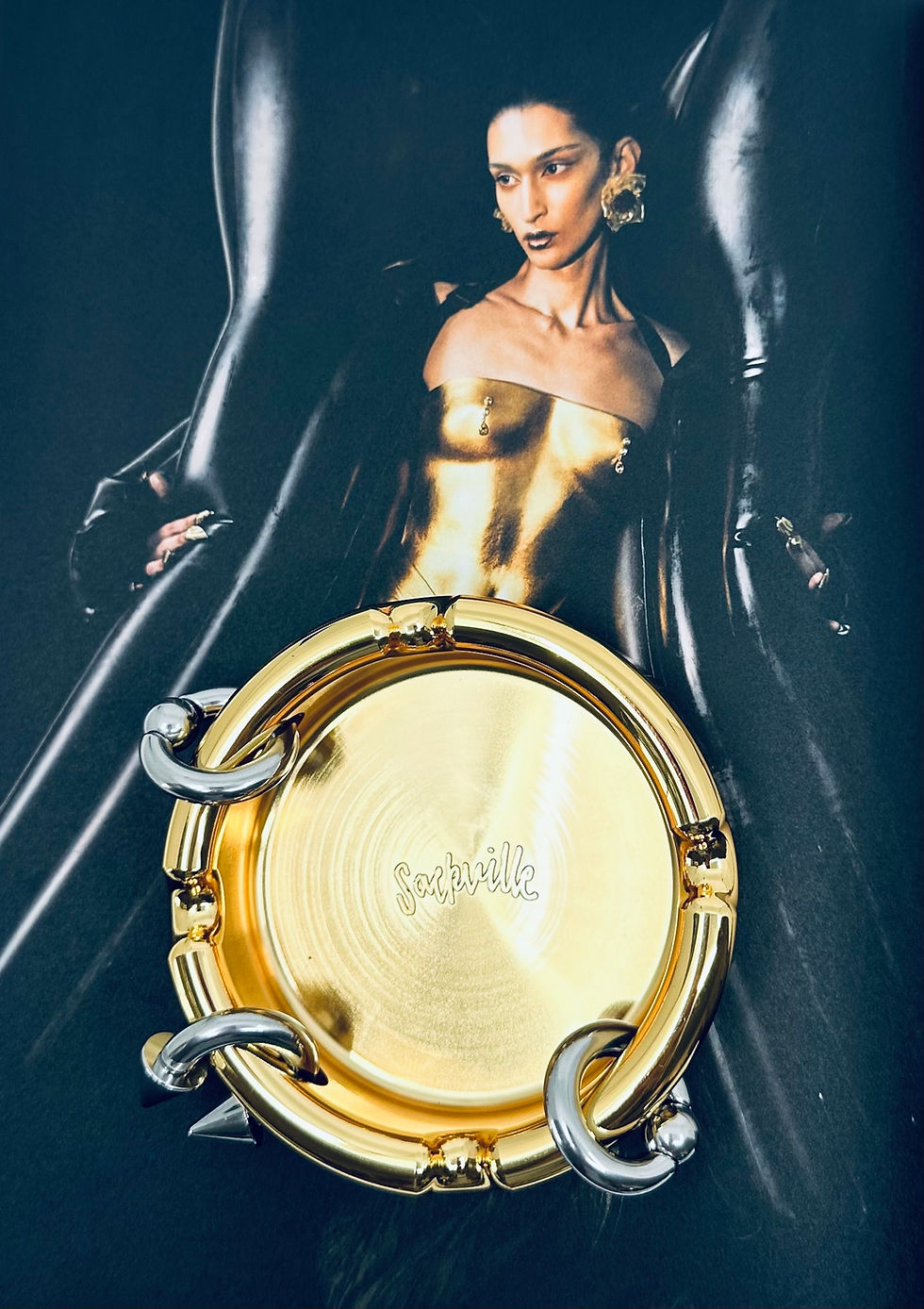
The brand's bestselling Chrome Pierced Ashtrays are a good example. Shiny, sculptural and immediately recognizable, they feel closer to collectible homeware than something destined for the back of a drawer.
“She’s stunning and everyone loves her,” Lana Van Brunt says.

Taste Can't Be Designed by Committee

Lana is skeptical of an industry that spends a lot of time looking sideways.
“Most of this industry is either playing it painfully safe or watching over its shoulders to see what its neighbor is doing so that it can create some iteration of that product,” she says.
SACKVILLE intentionally keeps its eyes elsewhere.
“I don’t take reference from the cannabis industry,” Van Brunt explains. “I find inspiration from the most unlikely sources.”
She also runs every part of the company herself, from product concepts and manufacturing to the copy landing in customers' inboxes. That level of control means the brand's personality doesn't have to survive layers of approvals.
“What you're buying hasn't been through eleven rounds of brand safety review,” she says. “It's one point of view, executed obsessively.”
In an era where brands can start looking suspiciously similar after approximately 15 minutes on Pinterest, that matters.
SACKVILLE Is Building a Bigger World
The brand's universe is expanding beyond its core product line.
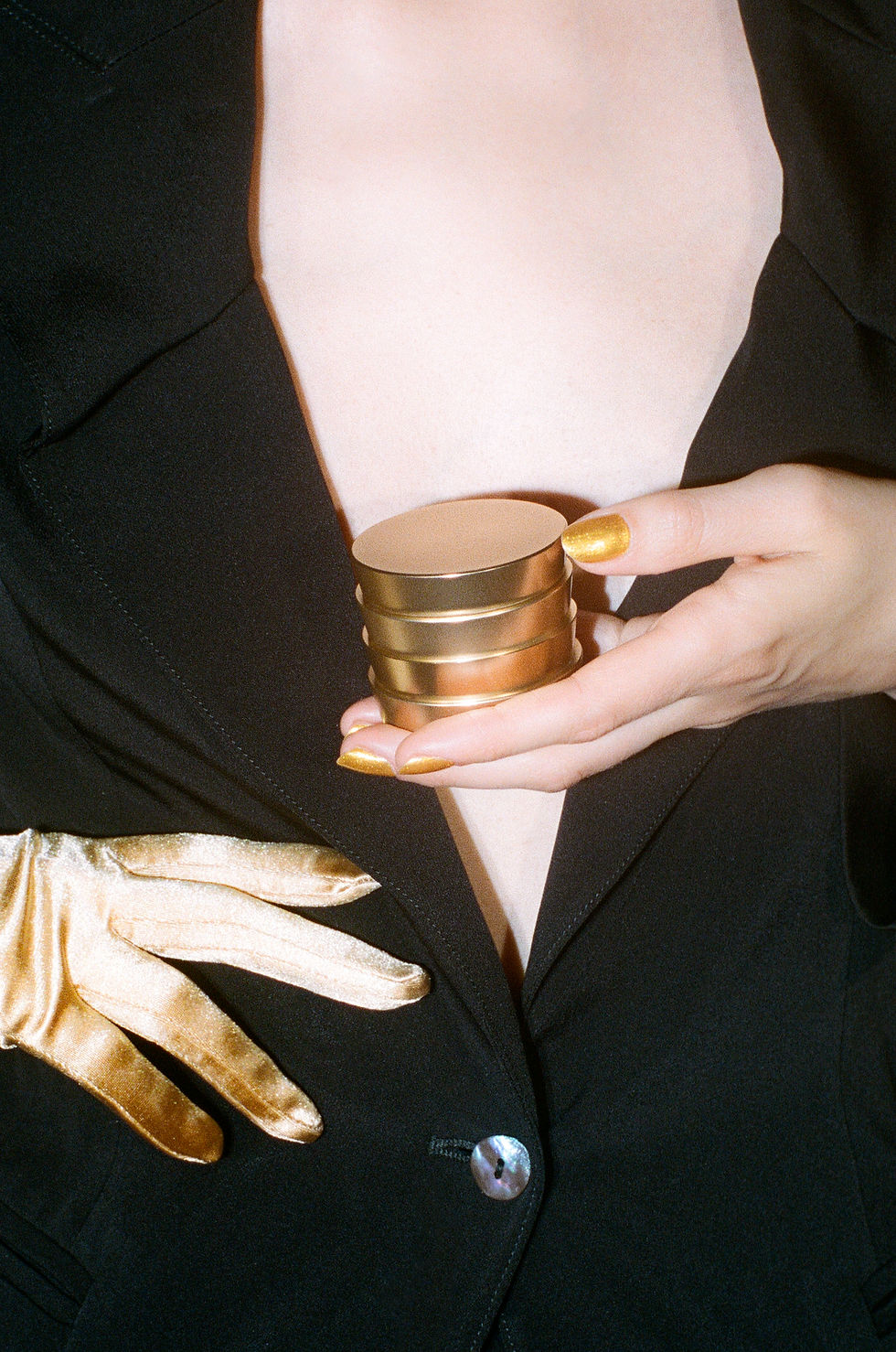
SACKVILLE recently linked with Mass Appeal on a limited-edition rolling paper dispenser celebrating the company's 30th anniversary. The gold, MTA-inspired piece turns a familiar piece of New York iconography into a collectible smoking accessory.
Lana Van Brunt is also developing “By Design,” an ongoing community series and slow-conversation platform centered around the idea of the designed life as a political act. Quarterly gatherings and a publication space will bring together people building things on their own terms.
Meanwhile, more SACKVILLE is coming.
SACKVILLE is expanding the Pierced collection, developing apparel and working on another collaboration she can't announce yet, but hopes will arrive around the holidays.
Apparently, it's one of those “how the fuck is this happening, this is a dream” projects.
We'll take that as a good sign.

The Road Here Was Messy
SACKVILLE's polished exterior came from a decidedly unpolished founder story.
Lana Van Brunt started the company with a business partner in 2018. The business was sold in 2019 at an early stage, followed by what she describes as being forced into bankruptcy and having to fight to buy the company back.
She reclaimed SACKVILLE and relaunched it in 2020 while also launching the private-label design studio now known as GFTT STUDIOS.
Both businesses grew rapidly.
Behind the scenes, however, Lana says the partnership was no longer equitable. In 2025, she bought out her business partner.
Then she rebuilt SACKVILLE. Again.
This time, Lana narrowed the product assortment, sharpened the tone and doubled down on what had made the brand interesting in the first place: being bold, irreverent and incredibly specific.
She stopped worrying about making something everybody could understand.
Instead, SACKVILLE became a world that was “decidedly NOT for everybody,” but where anyone who found themselves inside it would immediately know it was theirs.
Culture First, Cannabis Second
“I didn't come up in cannabis, I came up in culture,” Lana says.
It's probably the cleanest explanation for SACKVILLE.
Rather than taking cues from whatever is currently trending within the category, Lana has built the company around her own references, obsessions and taste. The result feels closer to a design studio or cultural project that happens to exist within cannabis.
“Everything I make, I'd want on my own shelf first,” she says. “I don’t think that a brand should be something without a voice and an opinion at this stage of the world.”
After selling the company, fighting to get it back, navigating the end of a business partnership and relaunching SACKVILLE twice, Lana finally has complete control over what that voice sounds like.
“Sackville has something to say and it’s going to say it.”
This time, nobody else is editing it.

You’ve said Sackville is “decidedly not for everybody.” In an era where brands are obsessed with mass appeal, why is having a strong point of view more important to you than being universally liked?
I think this comes with maturing as well. Trying to be liked by everyone is abandoning yourself. Period. It’s good to not be liked by some people, and that’s the same in building a brand. The customers who grow with you and love your point of view in design, aesthetic, and voice are the people who will stick with you long term. The people who you try hard to cater to their wants in the moment, trend hopping, are fickle and are gone as quickly as they arrived.
You don’t look to the cannabis industry for creative references. Where does Sackville’s inspiration actually come from, and what’s influencing the world you’re building right now?
I definitely don't look to cannabis for inspiration; it feels like a dog chasing its tail. Nothing new would happen if I were to do that. I also try not to be too much on the internet, which sounds a bit crazy because it's hard to exist these days without it, but I find that there's so much "inspiration" on the internet that it can feel overwhelming and cloud what I'm actually interested in, excited about, or inspired by. It's inspiration overload!
There are so many people making so many cool things; it can feel impossible to feel like you're making an impact. So I tune it all out. I just make what I like. I get one random idea sometimes from life, fashion, movies, a dream - sketch it out, and then I just imagine what if it was like X or Y, or how could I make it do this or that! I dream, research, source, try, and fail, and this process takes a very long time, which has become very intentional.
I wrote a substack article a little while back about how I am trying to slow down the development cycle to be very intentional about every product that is produced, not just to sell things for the sake of it, but to make things that last a lifetime, that people feel proud to use and display and that truly embody themselves in some way through the design and the brand.
Cannabis went through an “elevated” design era meant to move the industry beyond stereotypical stoner aesthetics. Has that actually pushed design forward, or has it just created a new kind of sameness?
Hmmmm, that's a great question, and I'm sure there are many perspectives on this depending on who you ask. From where I'm standing, I'm not sure we've moved past this just yet.
There are some incredible brands and stores in the industry doing some truly beautiful things and creating unique, thought provoking designs that I do believe have moved cannabis into a space that has removed the stigma, but a lot of those brands remain at an inaccessible price point or are sold in very few locations, that make access inaccessible, so the large majority of products and marketing remains the same narrative - different, yes, but to your point, very much a new kind of sameness that consumers have already tired of.
You’ve sold Sackville, fought to buy it back, rebuilt it, and eventually became its sole owner. How did that experience change your relationship with ownership, creative control, and what you’re willing to compromise on?
The lessons I've learned within the lifetime of Sackville and GFTT Studios, the Private Label Design Studio, have been wild, and I could talk forever about them - they have been plentiful, haha. But to keep it sweet, regarding my relationship with ownership, I think the dominant learning has been understanding that no ownership relationship is entered into thinking anything could ever go wrong or go sour, and the effort put in in good faith at the beginning to have difficult conversations with your partners, whether that be investors or founding partners, to protect your own interest and efforts will be the only thing you have to stand on should the worst happen. It is important that you do that while waters are calm; you will thank yourself later.
My relationship with creative control, that has been truly life changing. Having to compromise with partners that are uncompromising or who do not share your creative vision, values, future goals, etc., is painful and, over time, pulled the life and love I had for the businesses I created from me. Having full creative control back has been a rebirth and allowed me to fall in love with every aspect of the brand again, and it is something that I would never give up. Lastly, the lessons on comprise for me have been more so a lesson in how to comprimise less.
I believe as women we have been raised in a society that tells us it will reward us for our agreeableness, but I can promise you there is no reward. At this stage, I will not compromise on anything when it comes to the brand values and vision that I have for it. Period.
Now that Sackville is fully yours again, what does the next version of the brand look like, and what are you finally able to do that you couldn’t before?
Now that Sackville is mine again, opportunity is endless, and I'm legit so excited!! My vision for the brand takes Sackville into other categories, allowing us stoners to be seen holistically as we exist throughout all areas of our lives.
Designing products that fulfill the expectations we have as we entertain our friends and family, the fashion and accessories we love and want to adorn ourselves in, and the products we need to use to elevate our cannabis lifestyle when we are moving about our daily lives.


Comments